
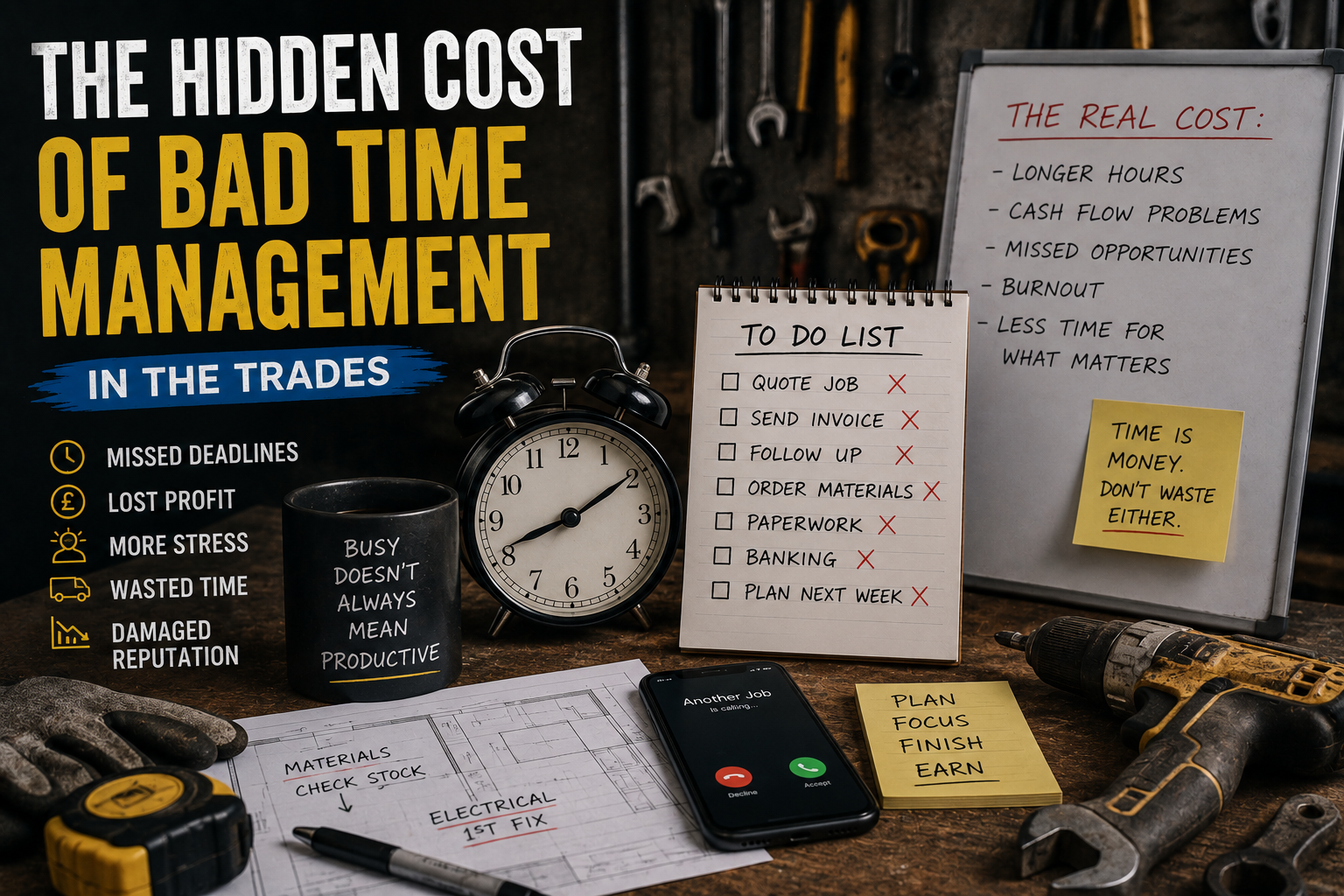
“Most tradesmen think the biggest threat to their business is a lack of work.
In reality, many lose thousands every year through poor organisation, missed appointments and constantly operating in reactive mode.”
In reality, many are losing money because of poor organisation, bad scheduling and constantly operating in reactive mode.
I’ve worked around trades and construction projects for over 30 years, and I’ve seen technically brilliant tradesmen struggle financially simply because they couldn’t manage their time properly.
They forgot quotes.
Missed appointments.
Turned up late.
Double-booked jobs.
Promised things they couldn’t deliver.
The result is rarely immediate disaster.
Instead, it slowly damages:
- reputation
- repeat business
- cash flow
- stress levels
- profitability
Good time management is not just an organisational skill.
It’s a financial skill.
Busy Does Not Always Mean Profitable
One of the biggest misconceptions in the trades is:
“If I’m busy, I must be doing well.”
Not necessarily.
Some tradesmen are constantly busy because they are permanently firefighting problems caused by poor planning.
They:
- rush between jobs
- forget materials
- fail to invoice on time
- underquote because they’re distracted
- waste hours travelling inefficiently
Then wonder why there’s never any money left at the end of the month.
“A tradesman charging £250 per day only needs to waste one hour per day through poor planning to lose over £6,000 per year in billable time.”
“This is why cash flow problems are often operational problems first. As I explained in The Real Difference Between Turnover, Profit and Cash Flow, being busy does not automatically mean a business is financially healthy.”
A full diary means nothing if the business is leaking time and profit everywhere.
Missed Opportunities Cost More Than You Think
Poor scheduling doesn’t just lose hours.
It loses trust.
“And once customers lose confidence in you, it’s incredibly difficult to win it back.”
Most customers will tolerate the occasional delay if you communicate honestly.
What they won’t tolerate is:
- No-shows
- Ignored messages
- Constant excuses
- Broken promises
Builders and repeat customers especially value reliability.
I’ve seen tradesmen lose long-term builder relationships worth tens of thousands per year simply because they stopped returning calls and constantly turned up late.
The frustrating part is that many of them were actually very good tradesmen.
But professionalism matters.
Often, the reliable average tradesman earns more than the disorganised excellent one.
Your Reputation Is Quietly Built Through Reliability
Many tradesmen focus heavily on technical skills while ignoring the basics of running a business properly.
But customers remember things like:
- Arriving when you said you would
- Answering messages
- Providing quotes quickly
- Keeping them informed
Those habits build trust.
And trust allows you to:
- Charge better rates
- Win repeat work
- Reduce price objections
- Generate referrals
This also links closely to pricing confidence.
Tradesmen who are organised and professional usually price jobs more accurately because they understand their time better, which I covered in How to Price a Job Properly (Step-by-Step Guide).
Bad Scheduling Creates Financial Stress
Poor organisation creates hidden financial damage.
For example:
- Forgetting to invoice
- Missing quote follow-ups
- Underestimating job durations
- Leaving gaps between jobs
- Buying materials last minute
- Unnecessary travel time
All of these reduce profit.
Many self-employed tradesmen blame “the economy” when the real issue is operational chaos.
In Why Most Tradesmen Struggle With Cash Flow (Even When Busy), I explained how inconsistent systems create unstable finances.
Good businesses run on systems.
Not memory.
“Simple Time Management Systems for Tradesmen”
You do not need expensive software or complicated management systems.
Most tradesmen would improve massively simply by:
- Using a proper calendar
- Scheduling quote follow-ups
- Planning the week ahead
- Allowing buffer time between jobs
- Confirming appointments
- Tracking invoices properly
Simple habits solve expensive problems.
One of the best routines is a weekly review every Sunday evening:
- Review upcoming jobs
- Check materials
- Follow up quotes
- Plan travel routes
- Confirm appointments
That one habit alone can reduce stress dramatically.
Overpromising Is One of the Biggest Mistakes
A major problem in the trades is saying “yes” too quickly.
Many tradesmen:
- Promise unrealistic start dates
- Squeeze in extra jobs
- Underestimate workloads
Then the entire schedule collapses.
This usually comes from fear of losing work.
But ironically, overpromising often loses more work long term because customers stop trusting you.
Professional tradesmen protect their reputation by being realistic.
It is better to say:
“I can do it properly next Thursday”
than:
“I’ll try to squeeze you in”
and fail to turn up.
Reliable Tradesmen Usually Earn More
There is a reason organised tradesmen often outperform technically better competitors.
They:
- Waste less time
- Keep customers happier
- Manage cash flow better
- Invoice consistently
- Build stronger reputations
Reliability compounds over time.
The same applies financially.
Tradesmen who plan properly are usually better at:
- Setting aside tax
- Controlling spending
- Managing profit
- Avoiding financial panic
That’s why organisation is not separate from financial literacy.
It is part of it.
Final Thoughts
Bad time management rarely destroys a trades business overnight.
Instead, it slowly chips away at:
- Profit
- Reputation
- Relationships
- Mental energy
Many tradesmen believe they need more work when what they really need are better systems.
Simple organisation habits can:
- Reduce stress
- Increase profit
- Improve reputation
- Create stability
“In the trades, reliability is one of the most underrated financial skills there is.
The tradesmen who consistently earn well long term are rarely the flashiest.
They are usually the ones who turn up, communicate properly, stay organised and build trust over time.”
Leave a Reply