
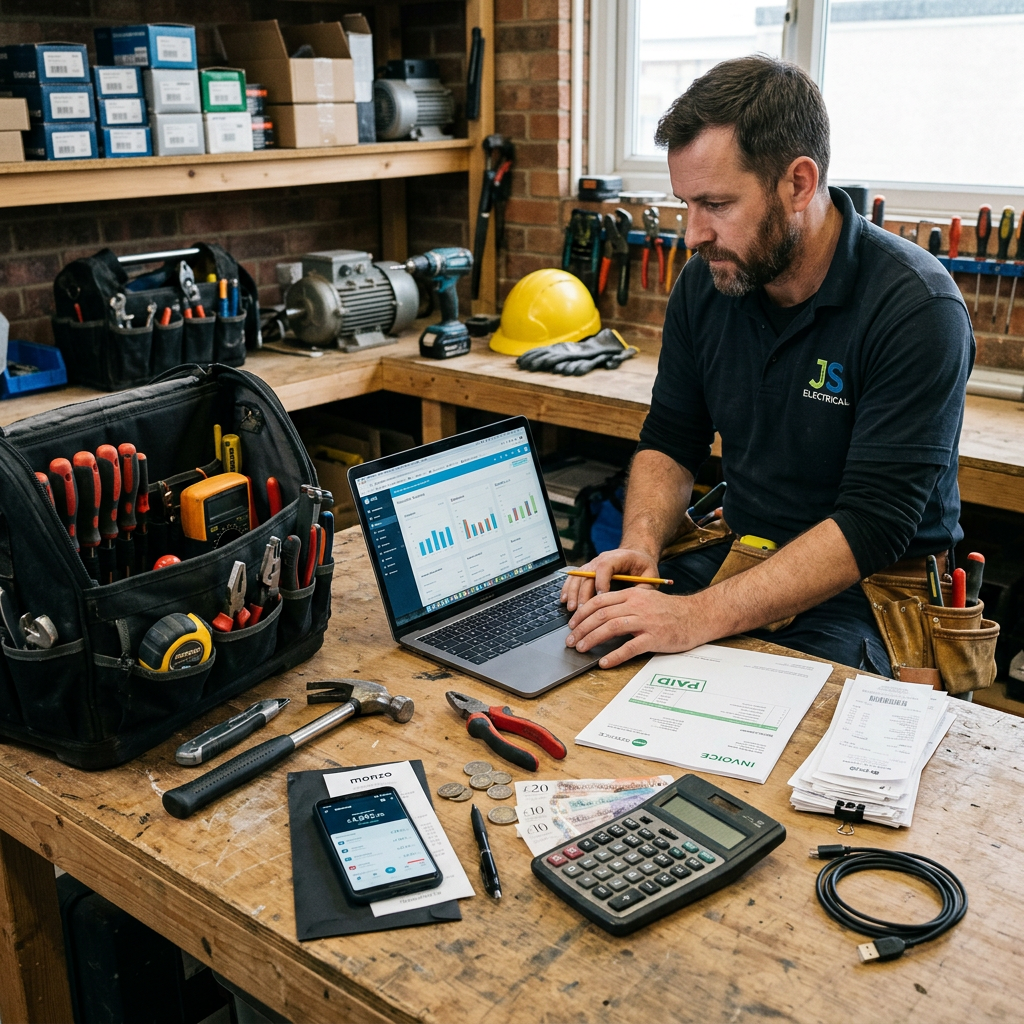
Pip: Finance for Tradesmen — where the van is the office, the glovebox is the filing cabinet, and somehow the business still turns a profit.
Mara: Electricians Mate has been writing about the systems that actually keep a trades business financially healthy — fuel costs, expense tracking, and getting invoices paid on time.
Pip: All the unglamorous stuff that quietly determines whether you're building something or just staying busy.
Mara: Let's start with fuel and expense control.
Fuel Cards and Expense Apps: Plugging the Leaks
Pip: Fuel is one of those costs that's easy to ignore week to week and painful to confront at year-end — and the fuel cards post opens exactly there.
Mara: Right, and the framing is direct: "Fuel is one of the biggest hidden costs in the trades. Most tradesmen focus heavily on winning work and increasing turnover, but rising diesel and petrol costs quietly eat into profit every single week."
Pip: So the real argument isn't about saving two pence per litre — it's about visibility. If you can't see the cost clearly, you can't manage it.
Mara: Exactly. The post walks through Shell, BP Plus, Allstar, Texaco Fastfuel, and UK Fuels — each suited to a different operation size and geography. The consistent thread is that one weekly invoice and built-in VAT receipts remove the receipt chaos entirely.
Pip: Which connects directly to the expense tracking apps post, because the chaos doesn't stop at fuel.
Mara: That post puts it plainly: most tradesmen don't have a spending problem, they have a tracking problem. Fuel on one card, materials on another, tool receipts buried in the van — then tax season arrives and you're reconstructing six months from memory.
Pip: The apps covered — QuickBooks, Xero, Dext, FreeAgent, Expensify — are all solving the same underlying problem: getting accurate financial information without spending your evenings doing admin.
Mara: And the post makes a point worth sitting with — poor expense tracking doesn't just create paperwork headaches. It leads to overpaying tax, mispricing jobs, and cash flow decisions made on incomplete information.
Pip: Systems over heroics, basically.
Mara: That's the throughline. Better information leads to better decisions — and that sets up exactly what invoicing is really about.
Invoicing Is Cash Flow Management
Pip: The invoicing apps post makes a claim that reframes the whole subject — invoicing isn't admin, it's cash flow management.
Mara: And it opens with a sharp picture of what poor invoicing actually looks like: "If you're still sending handwritten invoices, chasing payments through text messages, or trying to remember who owes what from scraps of paper in the van, you're probably losing money without realising it."
Pip: The delay between finishing a job and sending an invoice is where cash flow quietly bleeds out.
Mara: The post covers QuickBooks, Xero, Tradify — which was built specifically for trades and combines quotes, job scheduling, and invoicing — plus Invoice Simple for sole traders who just need to start looking professional immediately, and FreeAgent for straightforward bookkeeping. The consistent recommendation is to invoice from your phone the moment the job is done.
Pip: Because the tradesmen who get paid fastest are the ones who invoice immediately.
Mara: And automatic payment reminders matter too — they remove the awkwardness of chasing money manually, which is apparently where thousands of pounds quietly disappear every year.
Pip: Fuel costs, expense tracking, invoicing — none of it is exciting, but all of it is where the profit actually lives.
Mara: Strong systems compound. Sort the receipts, sort the invoicing, and the financial picture gets clearer every month.
Leave a Reply