
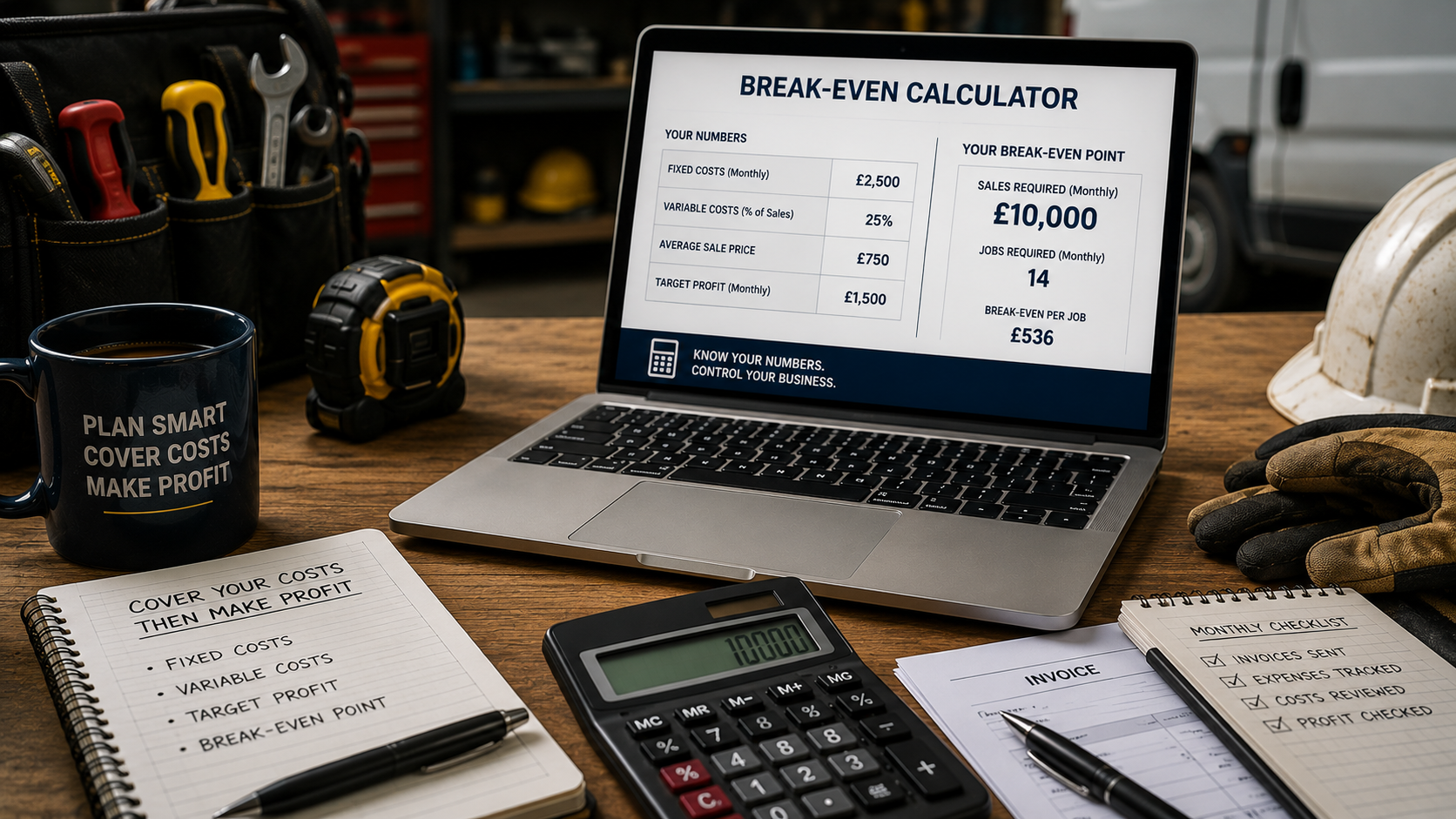
Most tradesmen know roughly what they charge.
Far fewer know what it actually costs to run their business.
That’s a problem because if you don’t know your break-even point, it’s impossible to know whether you’re making money or simply staying busy.
Use the calculator below to work out your annual overheads and discover how much your business needs to generate before you make a penny of profit.
What Is a Break-Even Point?
Your break-even point is the amount of money your business needs to generate to cover its costs.
Once you’ve covered those costs, every additional pound contributes towards your wages and profit.
For example, if your annual business overheads are £12,000, your business must generate at least £12,000 before you begin making money.
Many tradesmen underestimate this figure because they only think about obvious expenses such as fuel and materials. In reality, running a trades business often involves many hidden costs.
Common Business Overheads for Tradesmen
Typical business expenses include:
- Van finance or lease payments
- Vehicle insurance
- Fuel costs
- Public liability insurance
- Tool replacement
- Accountant fees
- Software subscriptions
- Mobile phone costs
- Advertising and marketing
- Training and qualifications
- Professional memberships
Even small monthly expenses add up over the course of a year.
Why Knowing Your Break-Even Point Matters
Understanding your break-even point can help you:
Price Jobs Properly
Many tradesmen base their prices on what competitors charge.
The problem is that your costs may be completely different.
Knowing your break-even point allows you to price work based on your own business rather than somebody else’s.
For a full guide, see How to Price a Job Properly.
Avoid Undercharging
A busy diary doesn’t always mean a profitable business.
If your overheads are higher than you realise, you could be working long hours while making very little profit.
Make Better Business Decisions
Knowing your costs helps you decide:
- Whether to buy a new van
- Whether to hire staff
- Whether to invest in tools or equipment
- Whether your current pricing is sustainable
What Is a Good Break-Even Figure?
There is no universal answer because every business is different.
A sole trader with low overheads may have a very low break-even point.
A larger business with employees, premises and multiple vehicles may need to generate significantly more income each month before becoming profitable.
The important thing is knowing your own number.
Reduce Your Break-Even Point
If your break-even figure is higher than expected, consider:
- Reviewing unnecessary subscriptions
- Reducing fuel costs where possible
- Shopping around for insurance
- Improving efficiency
- Increasing productivity
- Raising prices where appropriate
Small improvements across several areas can make a significant difference over time.
Related Articles
If you found this calculator useful, you may also want to read:
- How to Price a Job Properly
- The Real Cost of Running a Trades Business in the UK
- How to Work Out Your Break-Even Point as a Tradesman
- Why Most Tradesmen Undercharge for Jobs
- How to Manage Cash Flow in the Trades
Disclaimer
This calculator is intended as a guide only. Actual business costs and profitability will vary depending on your circumstances.
Leave a Reply