
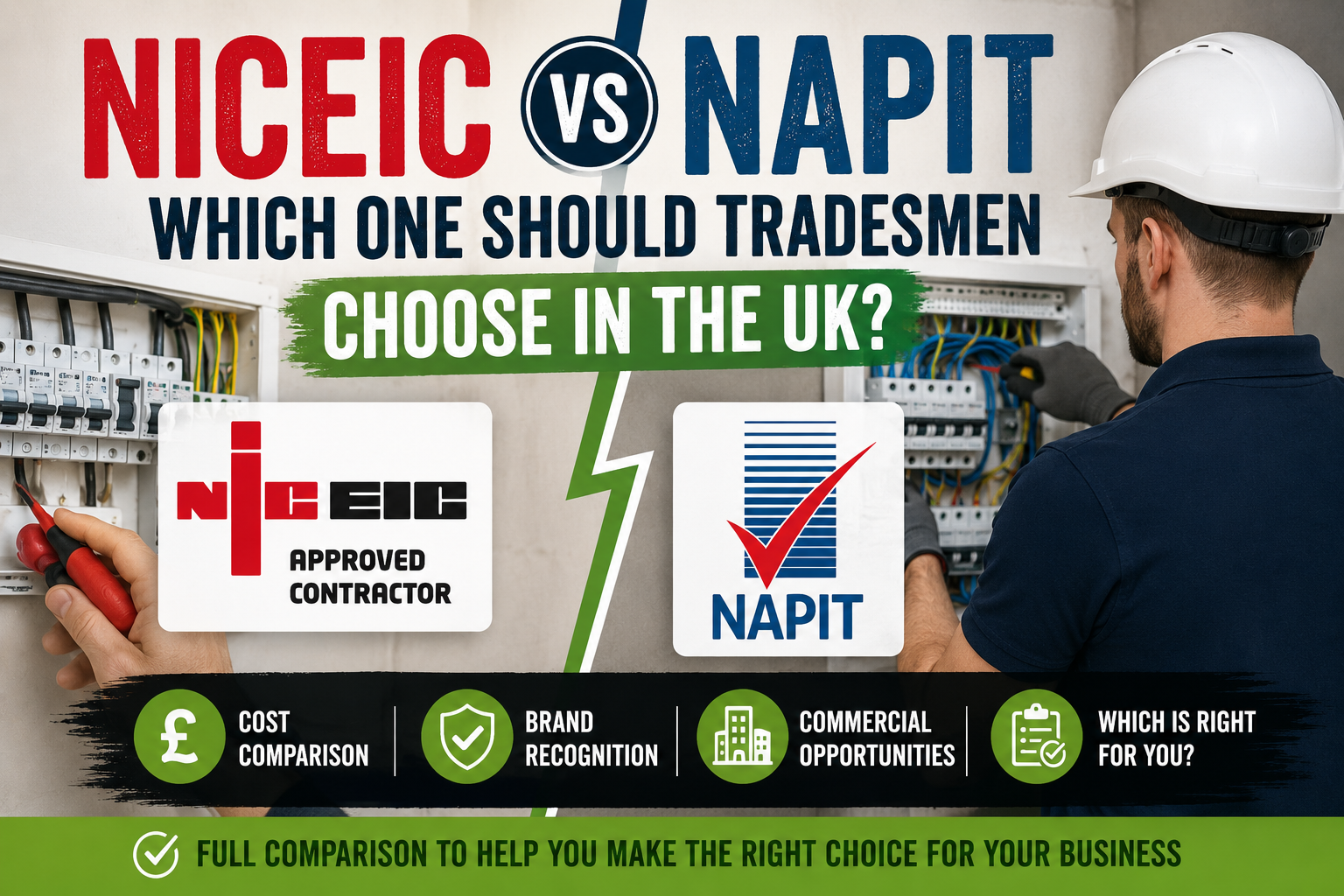
If you’re an electrician starting your own business, one of the first decisions you’ll make is whether to register with NICEIC or NAPIT.
Both schemes allow you to self-certify electrical work and both are fully recognised in the UK.
But there are important differences when it comes to:
- Cost
- Brand recognition
- Commercial opportunities
- Ease of joining
- Long-term business goals
The good news?
There isn’t a right or wrong answer.
The best choice depends on the type of electrical business you want to build.
Quick Answer: NICEIC vs NAPIT
If you just want the short version:
- Choose NICEIC if you want stronger brand recognition and plan to target higher-value or commercial work
- Choose NAPIT if you want lower costs and are focused on domestic jobs
Both will allow you to work legally.
Neither will make your business profitable on its own.
Which Is Better: NICEIC or NAPIT?
For most domestic electricians, there is very little practical difference between the two schemes.
NICEIC tends to have stronger public recognition and may carry more weight when targeting higher-end domestic or commercial work.
NAPIT is often slightly cheaper and popular with sole traders and smaller businesses.
In reality, most customers care more about:
- Reviews
- Professionalism
- Communication
- Price
- Reliability
Your certification scheme alone is unlikely to win or lose you work.
What NICEIC and NAPIT Actually Do
Both organisations:
- Assess your work
- Ensure compliance with regulations
- Allow you to self-certify certain types of electrical work
- Provide certification schemes recognised in the UK
From a legal standpoint, either one will do the job.
This is important:
Your choice here does not determine whether you make money or not
That comes down to how you run your business — pricing, cash flow, and structure.
(If you haven’t already, read: How to Price a Job Properly (Step-by-Step) and Why Tradesmen Struggle With Cash Flow)
Cost Comparison: NICEIC vs NAPIT
Costs change over time, but broadly:
NICEIC:
- Higher upfront registration
- Higher annual fees
NAPIT:
- Slightly cheaper entry
- Lower ongoing costs
This leads many to assume:
“NAPIT is better because it’s cheaper”
That’s not always true.
Because you shouldn’t look at cost in isolation.
You should look at return on cost — something most tradesmen ignore when they don’t fully understand
(See: The Hidden Costs of Being Self-Employed in the Trades)
Typical Costs
| Item | NICEIC | NAPIT |
|---|---|---|
| Initial registration | Higher | Lower |
| Annual fees | Higher | Lower |
| Assessments | Required | Required |
| Ability to self-certify | Yes | Yes |
Knowing your break-even point is equally important. Our Tradesman Break-Even Calculator can help you work out the minimum you need to earn before making a profit and there for a decision.
Perception and Credibility
This is where the real difference starts to appear.
NICEIC:
- More widely recognised by the public
- Often preferred in commercial or higher-end work
- Seen as the “premium” option
NAPIT:
- Fully legitimate and recognised
- Less brand awareness with general customers
- Often used by sole traders and smaller firms
Now here’s the truth most people won’t say:
Most domestic customers won’t know the difference between NICEIC and NAPIT — they’re judging you on trust, communication, and price.
They just want:
- Someone reliable
- A fair price
- Work done properly
Your ability to win work will come far more from:
- How you price jobs
- How you communicate
- How professional you appear
Do Customers Prefer NICEIC?
Some customers specifically ask for NICEIC electricians because the brand has been around for many years and is widely advertised.
However, many domestic customers have never heard of NAPIT and simply want reassurance that you’re properly registered and competent.
Good reviews and recommendations usually have far more influence than the logo on your van.
Which One Should You Choose?
Choose NICEIC if:
- You want stronger brand recognition
- You’re targeting higher-value or commercial work
- You want the perceived “premium” positioning
Choose NAPIT if:
- You’re starting out
- You want to keep costs lower
- You’re focused on domestic work
- You understand that your business performance won’t depend on the logo
Which Scheme Is Better for New Electricians?
If you’re just starting your business, keeping costs under control is important.
Many newly self-employed electricians choose NAPIT because of the lower cost of entry.
However, if your long-term goal is to move into commercial work or build a premium brand, NICEIC may be worth considering despite the higher fees.
The Mistake Most Tradesmen Make
They treat this decision as if it will change their income.
It won’t.
You can be:
- NICEIC registered and still undercharging
- NAPIT registered and highly profitable
The difference comes down to:
- Pricing correctly
- Managing cash flow
- Controlling costs
(See: Why Most Tradesmen Undercharge for Jobs and How to Manage Cash Flow in the Trades)
Can You Switch from NAPIT to NICEIC?
Yes.
Electricians switch between schemes regularly.
You will normally need:
- A new assessment
- Updated paperwork
- Payment of registration fees
The process is usually straightforward and shouldn’t stop you changing schemes if your business needs evolve.
The Real Decision
This isn’t about compliance.
It’s about positioning.
Ask yourself:
- What type of work do I want?
- What type of clients do I want?
- How do I want my business to be perceived?
Then choose the scheme that supports that.
Before making that decision, it’s worth understanding Why Some Tradesmen Earn £30k and Others Earn £100k.
This isn’t just about certification — it’s about how your business is structured. If you’re unsure about that, read Sole Trader vs Limited Company for Tradesmen before making bigger decisions.
NICEIC vs NAPIT: Side-by-Side Comparison
| Feature | NICEIC | NAPIT |
| Cost | Higher | Lower |
| Brand Recognition | Strong | Moderate |
| Commercial Work | More common | Less common |
| Domestic Work | Strong | Strong |
| Ease of Entry | Slightly stricter | Slightly easier |
Can You Switch Between NICEIC and NAPIT?
Answer it simply:
- Yes, you can switch
- You’ll need reassessment
- Costs involved
- Not a big deal long-term
This is a real search query you’re currently missing.
Frequently Asked Questions
Is NICEIC better than NAPIT?
Neither is objectively better. The right choice depends on your business goals, budget and target customers.
Is NAPIT cheaper than NICEIC?
Generally yes, although fees change over time and you should always check current pricing.
Can domestic installers use either scheme?
Yes. Both schemes allow electricians to self-certify notifiable electrical work.
Do customers care whether I’m NICEIC or NAPIT?
Some do, but most domestic customers care more about trust, recommendations and price.
Can I change schemes later?
Yes. Switching is common and usually involves reassessment and registration fees.
Final Thoughts
Both NICEIC and NAPIT will allow you to operate legally and professionally.
But neither will fix a poorly run business.
If you want to earn more, focus on:
- Charging properly
- Structuring your work
- Managing your money
Because that’s where the real difference is made.
Leave a Reply