
Every Tradesman Has Asked This Question
Most self-employed tradesmen chase a bigger number.
“I’d be happy if I earned £50,000.”
Then it becomes £70,000.
Then £100,000.
But very few ever stop to ask a more important question.
How much is actually enough?
Because earning more doesn’t automatically make you wealthier.
I’ve known tradesmen earning over £100,000 who constantly worried about money, while others earning considerably less lived comfortably with very little financial stress.
The difference wasn’t their income.
It was knowing what income they actually needed.
The problem is that most tradesmen never calculate that figure.
Instead, they choose an income target because it sounds about right or because another tradesman mentioned earning it.
But until you know your number, you’ll always be guessing.
Read – What Is a Good Income for a Tradesman in the UK?
Stop Comparing Yourself to Other Tradesmen
One of the biggest mistakes tradesmen make is comparing themselves to everyone else.
You hear someone is charging £350 a day.
Another claims to earn six figures.
Someone else says they’re booked up for twelve months.
It’s easy to think you’re falling behind.
The reality is that everyone’s circumstances are different.
A tradesman with no mortgage, no children and an older van needs far less income than someone supporting a family, replacing expensive tools and saving for retirement.
Your target income should be based on your life, not somebody else’s.
The goal isn’t to earn more than the next tradesman. It’s to earn enough to support the life you actually want.
Read : Why Some Tradesmen Earn £30k and Others Earn £100k
Start With Your Personal Living Costs
Instead of asking:
“How much do I want to earn?”
Ask:
“How much do I actually need?”
List every personal expense.
- Mortgage or rent
- Council tax
- Food
- Utilities
- Fuel
- Insurance
- Holidays
- Clothing
- Children’s expenses
For many households this could easily total:
| Expense | Annual Cost |
| Mortgage | £12,000 |
| Household Bills | £7,500 |
| Food | £6,500 |
| Car Costs | £5,000 |
| Holidays | £3,000 |
| Other Living Costs | £8,000 |
| Total | £42,000 |
That isn’t your business target.
That’s simply what your household needs.
Now Add Business Reality
This is where many tradesmen get caught out.
If your household needs £42,000, you don’t simply earn £42,000.
You still need to cover:
- Income tax
- National Insurance
- Pension contributions
- Emergency savings
- Van replacement
- Tool replacement
- Training
- Time off work
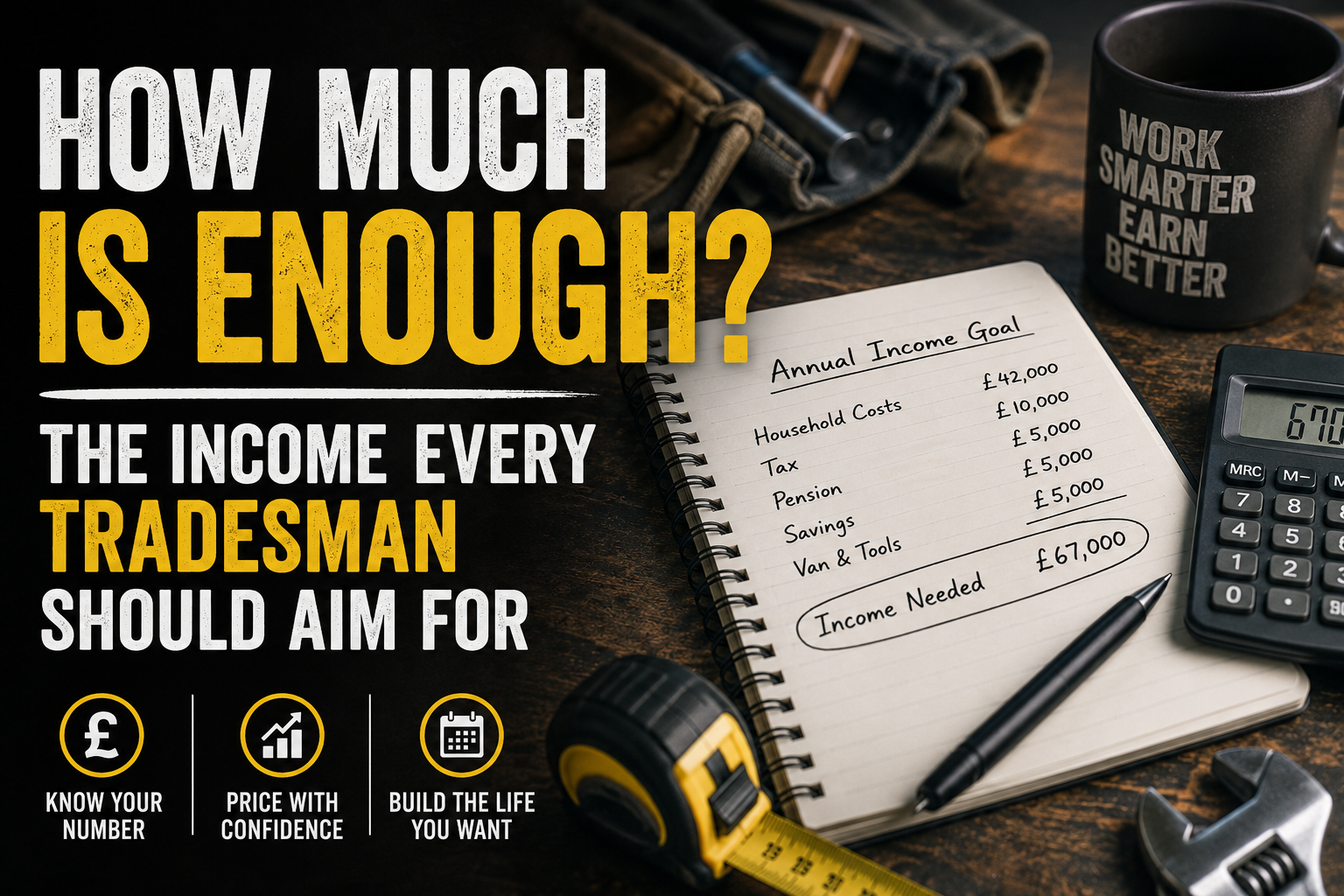
Suddenly your required income could become:
| Requirement | Annual Amount |
| Household Spending | £42,000 |
| Tax | £10,000 |
| Pension | £5,000 |
| Savings | £5,000 |
| Van & Tools | £5,000 |
| Income Needed | £67,000 |
This exercise often comes as a shock.
Once they include tax, pensions, replacing their van and putting money aside for emergencies, many tradesmen realise they’ve been pricing jobs around yesterday’s costs rather than today’s reality.
Many tradesmen discover they’re aiming far lower than they should be.
Read: How Self-Employed Tax Works for Tradesmen (Complete Guide)
Read: How Much Should Tradesmen Put Aside for Tax?
Don’t Forget Business Overheads
Your personal income isn’t the same as your business turnover.
Your business still has to pay for:
- Fuel
- Van finance
- Insurance
- Public liability
- Accountancy
- Marketing
- Software
- Phones
- Tools
- Materials
Ignoring these costs is one reason many tradesmen think they’re earning more than they really are.
Read: The Real Cost of Running a Trades Business in the UK
Read: What Are Overheads for a Tradesman?
Convert Your Income Into a Day Rate
Once you know your required annual income, work backwards.
For example:
Required personal income:
£67,000
Working days per year:
220
Minimum earnings needed:
Around £305 per working day before business profit and unexpected costs.
Remember, that’s the income your business needs to generate before allowing for mistakes, unpaid invoices or unexpected expenses.
Read: How to Work Out Your Break-Even Point as a Tradesman
If you regularly lose money on jobs or experience quiet periods, you’ll need to aim higher.
This often surprises tradesmen who think charging £220 per day is “good money.”
In reality, it may not be enough.
Read: Tradesman Day Rates UK: What You Should Really Be Charging
Read: Free Tradesman Day Rate Calculator
Read: The Truth About £300 a Day (It’s Not What You Think)
Income Means Nothing Without Profit
I’ve met tradesmen turning over more than £200,000 a year who struggled financially.
I’ve also met sole traders turning over less than half that who built real wealth.
Why?
Because profit matters.
Not turnover.
Not being busy.
Not posting pictures of a full diary on Facebook.
Profit is what pays your mortgage and builds your future.
Read: Why Most Tradesmen Earn Less Than They Think
Read: The Real Difference Between Turnover, Profit and Cash Flow
Read: Why Being Busy Doesn’t Mean You’re Making Money
Your Number Will Change Over Time
The income you need at 25 is unlikely to be the income you need at 45.
As life changes, so do your financial goals.
You might need more income because:
- You buy a house.
- You have children.
- You employ staff.
- You want to reduce your working hours.
- You start saving for retirement.
Review your target every year rather than assuming one figure will always be enough.
Money Should Buy Freedom
Many tradesmen spend years chasing bigger numbers without asking what they really want.
Do you want:
- More money?
- More free time?
- Less stress?
- Earlier retirement?
- A business that runs without you?
Sometimes earning slightly less while working four days a week creates a better life than chasing every job available.
Knowing when you have “enough” allows you to make decisions based on lifestyle rather than fear.
Calculate Your Own Number
Don’t base your target income on what another tradesman claims to earn.
Work out:
- Your personal living costs
- Your business expenses
- Your tax bill
- Your savings goals
- Your retirement plans
- Your desired lifestyle
Once you know those numbers, you’ll have a clear income target that’s based on reality—not guesswork.
When you know your number, pricing jobs, setting your day rate and planning for the future all become much easier.
Try our FREE Tradesman Day Rate Calculator to see what you should be charging based on your income goals.
Conclusion
The question isn’t:
“How much can I earn?”
It’s:
“How much do I need to earn to build the life I want?”
Once you know that figure, everything becomes easier.
You’ll price jobs with more confidence.
You’ll know whether your day rate is high enough.
You’ll stop comparing yourself to other tradesmen.
Most importantly, you’ll stop chasing bigger numbers for the sake of it and start building a business that gives you something far more valuable:
Financial security, freedom and choice.
Leave a Reply