
Category: Tax for Tradesmen
-
Free Tradesman Tax Set Aside Calculator (UK)
Stop Getting Caught Out By Unexpected Tax Bills One of the biggest mistakes self-employed tradesmen make is treating all money in the bank as spendable income. Then January arrives. And suddenly HMRC wants thousands. If you are self-employed, working CIS, or running your own trade business, you need to know exactly how much tax to…
-

Quick Tax Estimate Calculator For Tradesmen
Most tradesmen don’t get into trouble because tax is too high. They get into trouble because they don’t put enough aside. Enter your turnover and expenses below to see how much you should consider setting aside each month. Understanding Your Results Estimated Profit This is your turnover minus your business expenses. Suggested Tax Reserve This…
-

What Percentage Should Tradesmen Put Aside for Tax in the UK?
“A lot of tradesmen don’t have a tax problem.They have a spending problem disguised as a tax problem.” A portion of every payment you receive already belongs to HMRC — and if you don’t separate it early, tax season becomes painful very quickly. I’ve seen plenty of tradesmen earning good money but still panic when…
-
What Happens If You Don’t Pay Your Tax as a Tradesman? (UK Guide)
Introduction Most tradesmen don’t get into trouble with tax because they’re trying to avoid it. They get into trouble because they weren’t prepared for it. A quiet month, a big bill, or just not setting money aside properly — and suddenly January hits, and the money isn’t there. But once you miss that payment, things…
-
How Tradesmen Can Pay Less Tax Legally (UK Guide)
Introduction Most tradesmen don’t overpay tax because of the system — they overpay because they don’t structure things properly. Missed expenses, poor planning, and last-minute decisions can easily cost thousands each year. In this guide, we’ll break down how to legally reduce your tax bill — and where most tradesmen get it wrong. Quick Answer…
-
How to Avoid the January Tax Panic as a Self-Employed Tradesman
Introduction For many self-employed tradesmen, January can be a stressful time of year. The Self Assessment deadline arrives, and suddenly a large tax bill needs to be paid. This situation is often called the “January tax panic.” It happens when people haven’t prepared for their tax bill during the year and are forced to find…
-
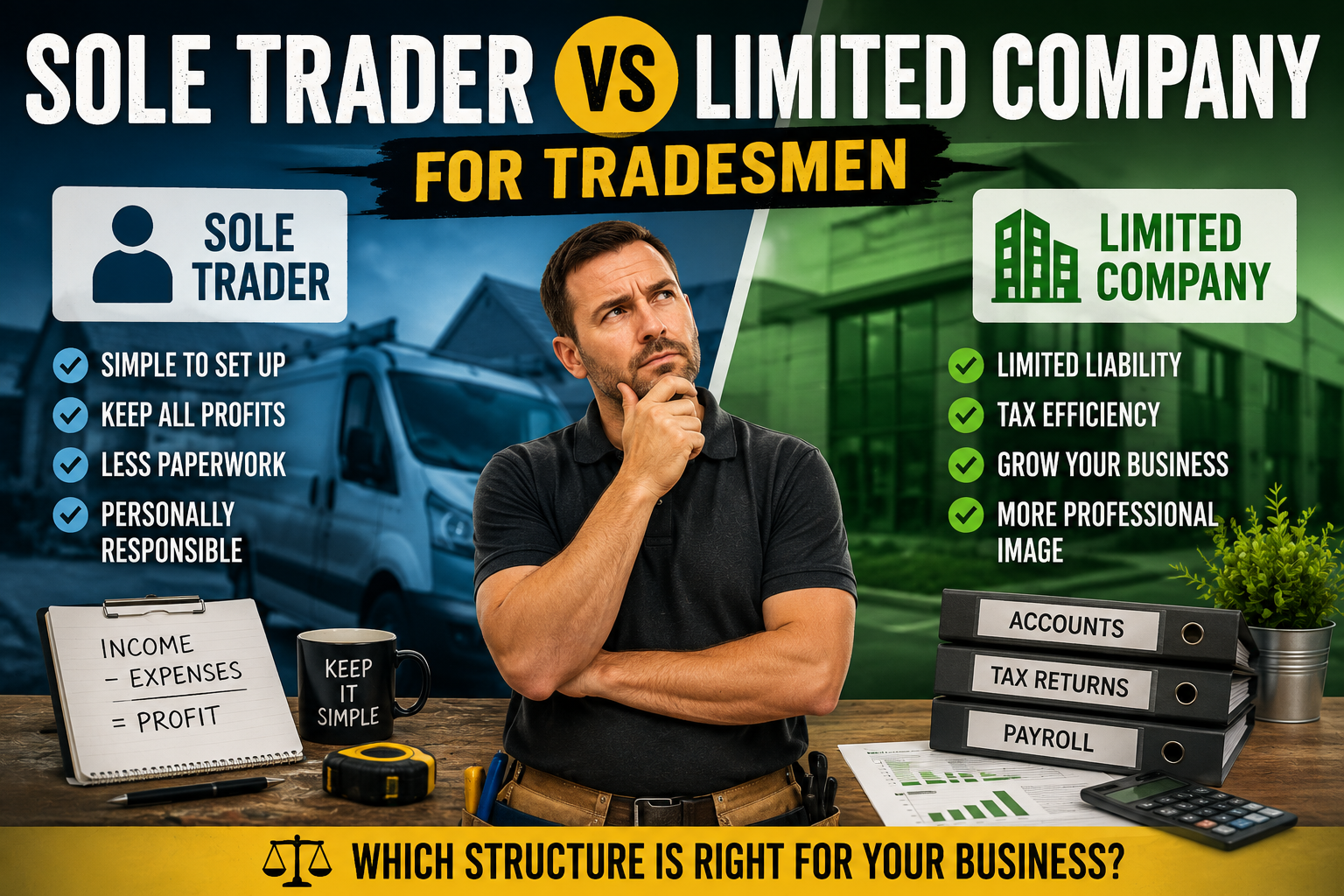
Sole Trader vs Limited Company for Tradesmen
Introduction One of the questions many tradesmen ask when starting out in business is whether they should operate as a sole trader or a limited company. Both structures are common in the UK construction and trades industry, and each has its own advantages and disadvantages. Most people start as sole traders because it is simpler…
-
Payments on Account Explained for Tradesmen
Payments on Account explained simply: Introduction Many self-employed tradesmen are shocked when they receive their first large tax bill. In some cases, the amount owed can feel almost double what they expected. This usually happens because of something called Payments on Account. Payments on Account are advance payments towards your next tax bill. They are…
-
The Most Common Tax Mistakes Self-Employed Tradesmen Make
The most common tax mistakes tradesmen make include: Introduction When you’re self-employed, managing tax becomes part of running your business. Unlike employees who have tax deducted automatically through PAYE, self-employed tradesmen are responsible for calculating and paying their own tax. Because of this, many people make mistakes during their first few years of self-employment. In…
-
What Expenses Can Tradesmen Claim Against Tax?
Introduction One of the biggest advantages of being self-employed is that you can deduct legitimate business expenses before paying tax. Many tradesmen pay more tax than necessary simply because they don’t realise what they’re allowed to claim. The basic rule from HM Revenue and Customs (HMRC) is simple: An expense must be “wholly and exclusively”…