
Tag: business
-

The Biggest Quoting Mistakes Tradesmen Make
Quoting jobs is one of the most important skills a tradesman can learn. A good quote can win the right work, protect your time, and ensure the job is profitable. A bad quote can lead to long days, difficult customers, and very little money at the end of the week. Many tradesmen lose money not…
-
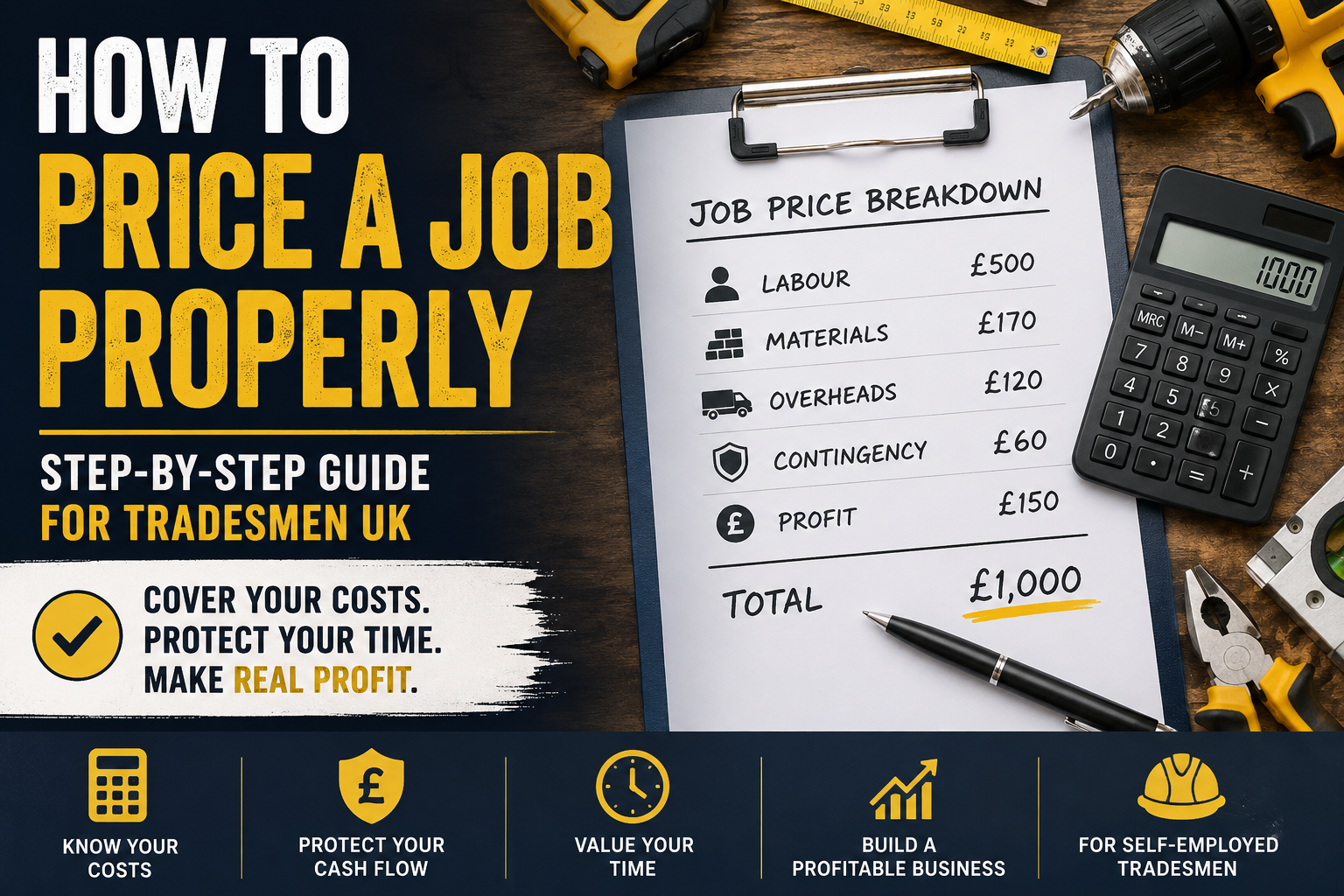
How to Price a Job Properly (Step-by-Step for Tradesmen UK)
One of the most expensive mistakes I see tradesmen make is pricing jobs based on instinct instead of proper numbers. I have seen good tradesmen work flat out for years… Busy diary. Constant customer enquiries. Long working days. Yet somehow there never seems to be enough money left at the end of the month. The…
-
Why Most Tradesmen Undercharge for Jobs
One of the biggest financial problems in the trades isn’t lack of work — it’s underpricing. Many tradesmen stay busy all year, work long hours, and still struggle financially. The issue usually isn’t effort or skill — it’s that the jobs simply aren’t priced properly. This is why so many tradesmen feel busy but not…
-
How to Calculate Your Day Rate as a Self-Employed Tradesman
Most self-employed tradesmen set their day rate by copying someone else on site. The problem is that many of those tradesmen haven’t calculated their own costs either. You hear numbers on site: But very few tradesmen actually calculate what they need to charge. The result? Many are busy all year but still struggling with tax…
-
Tradesman Day Rates UK: What You Should Really Be Charging
Introduction One of the hardest parts of being a tradesman isn’t the work — it’s deciding what to charge. Quote too high and you lose the job. Quote too low and you’re working for nothing. Many tradesmen stay busy all year but still struggle financially because their day rate simply doesn’t cover their real costs.…
-

How to Avoid the January Tax Panic as a Self-Employed Tradesman
Introduction For many self-employed tradesmen, January can be a stressful time of year. The Self Assessment deadline arrives, and suddenly a large tax bill needs to be paid. This situation is often called the “January tax panic.” It happens when people haven’t prepared for their tax bill during the year and are forced to find…
-

Sole Trader vs Limited Company for Tradesmen
Introduction One of the questions many tradesmen ask when starting out in business is whether they should operate as a sole trader or a limited company. Both structures are common in the UK construction and trades industry, and each has its own advantages and disadvantages. Most people start as sole traders because it is simpler…
-
Payments on Account Explained for Tradesmen
Payments on Account explained simply: Introduction Many self-employed tradesmen are shocked when they receive their first large tax bill. In some cases, the amount owed can feel almost double what they expected. This usually happens because of something called Payments on Account. Payments on Account are advance payments towards your next tax bill. They are…
-
The Most Common Tax Mistakes Self-Employed Tradesmen Make
The most common tax mistakes tradesmen make include: Introduction When you’re self-employed, managing tax becomes part of running your business. Unlike employees who have tax deducted automatically through PAYE, self-employed tradesmen are responsible for calculating and paying their own tax. Because of this, many people make mistakes during their first few years of self-employment. In…
-
What Expenses Can Tradesmen Claim Against Tax?
Introduction One of the biggest advantages of being self-employed is that you can deduct legitimate business expenses before paying tax. Many tradesmen pay more tax than necessary simply because they don’t realise what they’re allowed to claim. The basic rule from HM Revenue and Customs (HMRC) is simple: An expense must be “wholly and exclusively”…